

Off the Shelf
Reclaiming Design from Corporate Sameness

This is a shorter version of my piece from Disegno #40, where the full essay appears. Photos by Einar Aslaksen.
As brands chase predictable returns and algorithmic approval, we're losing the experimental spirit that makes design matter. Products feel increasingly similar, sanitized by focus groups and financial targets.
What if there was another way?
Off the Shelf (OTS) is a system where products are made entirely from standard components, sourced from maritime suppliers, hardware stores, and industrial catalogues. Each piece is assembled using simple tools: drilling, sawing, screwing, with no need for welding, custom tooling, or advanced production techniques. The component is the raw material; the user is the producer.
As design brands get absorbed into conglomerates and private equity portfolios, they've abandoned experimentation for predictable returns. Risk becomes liability. Curation follows the algorithm. The result is a narrowing of possibilities; fewer radical ideas, fewer accessible objects, and fewer opportunities to push our industry forward.
I created OTS because I'm interested in the things we make, the way we make them, and the value they bring. Coming from a family of architects, I feel rooted in Scandinavian design's frugal tradition; emphasizing material properties and systems thinking. OTS combines this architectural approach with interest in the rational evolution of components.
It's a counter-model that bypasses marketing, distribution, and algorithmic gatekeeping. As corporate design retreats into safe nostalgia, OTS offers a parallel space where failure is learning, not liability.
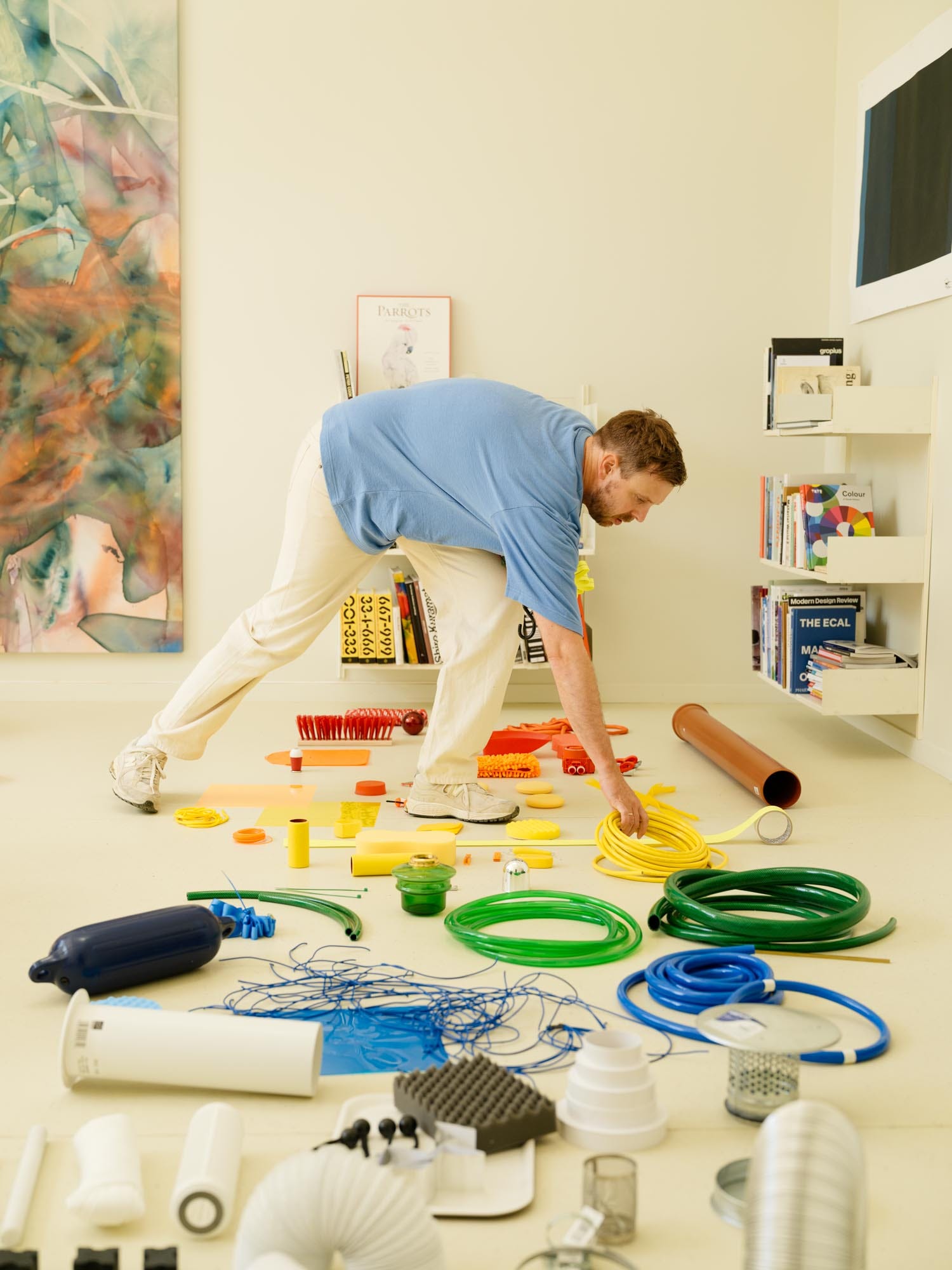
Design as Recipes
OTS is a system where products are made entirely from standard components; combined in new ways.
I call them recipes because, like cooking, they're open to interpretation and adaptation. For some reason, we accept that products come fully completed, while we'd never accept this as our only choice for food. Imagine if you could only eat pre-cooked meals; no recipes, no kitchens. Similar restrictions plague corporate design.
Three Examples
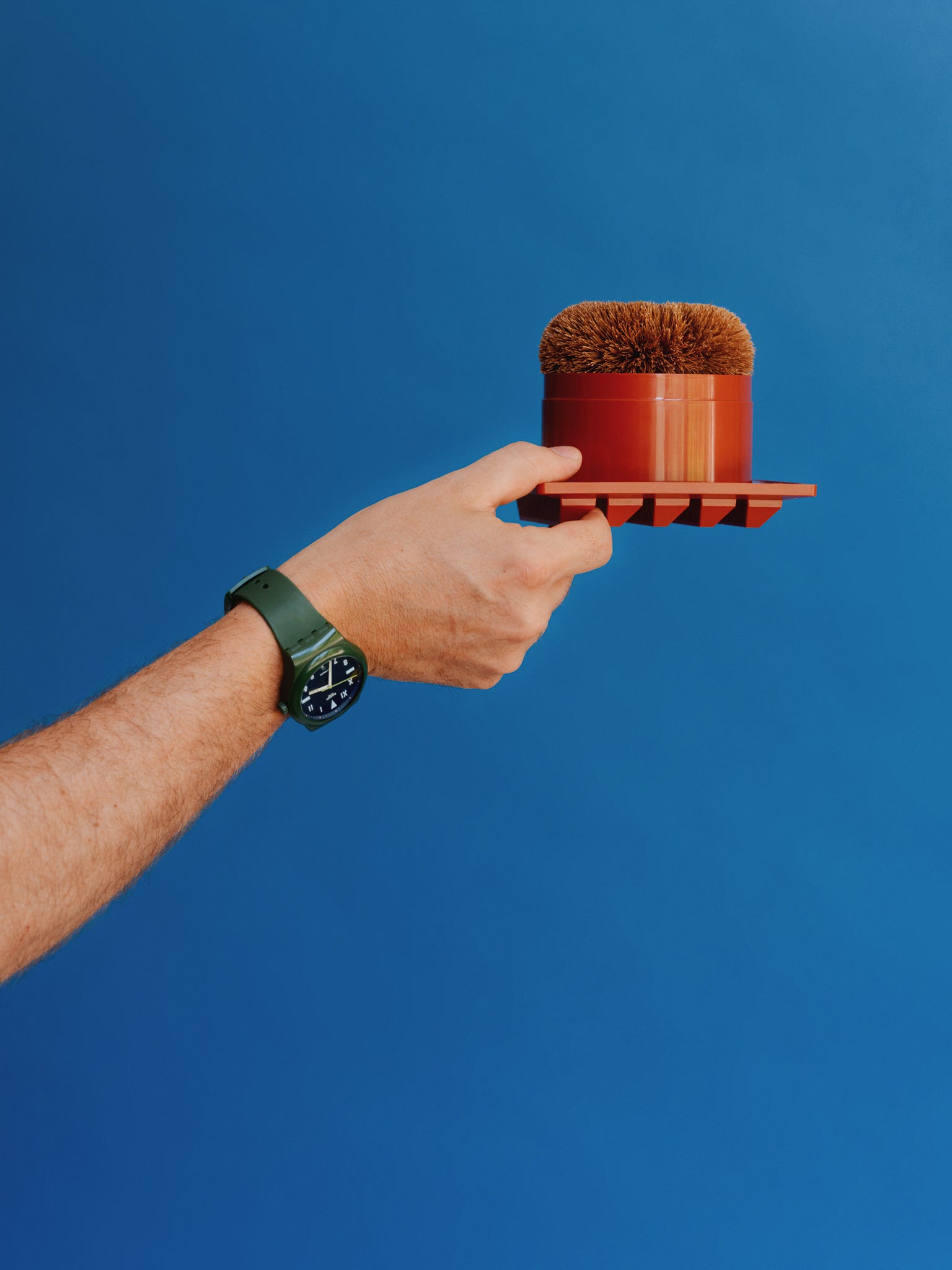
The Scent Disperser: A ventilation duct cover paired with a coconut fiber body scrub. Drop scent into the fibers; they disperse it gently while the duct elevates the piece, letting fragrance pass through. The contrasting textures and profile create an almost creature-like appearance, always a good sign.
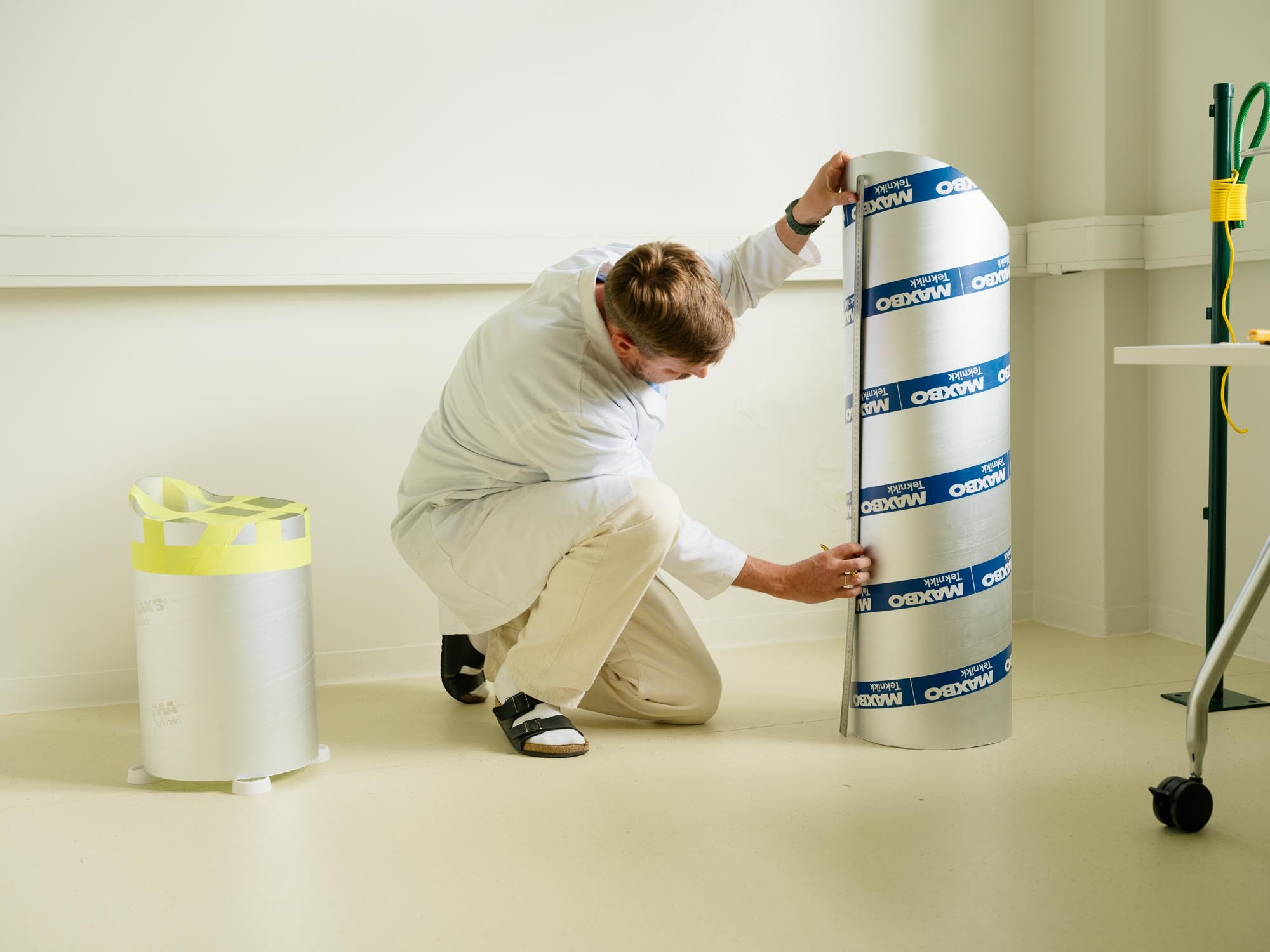
The Stool: A cardboard ventilation tube with an aluminum strut inside for stiffening. The seat uses sail repair tape, the feet are washing machine shock absorbers. The internal aluminum strut doubles as a handle. Surprisingly sturdy and comfortable.
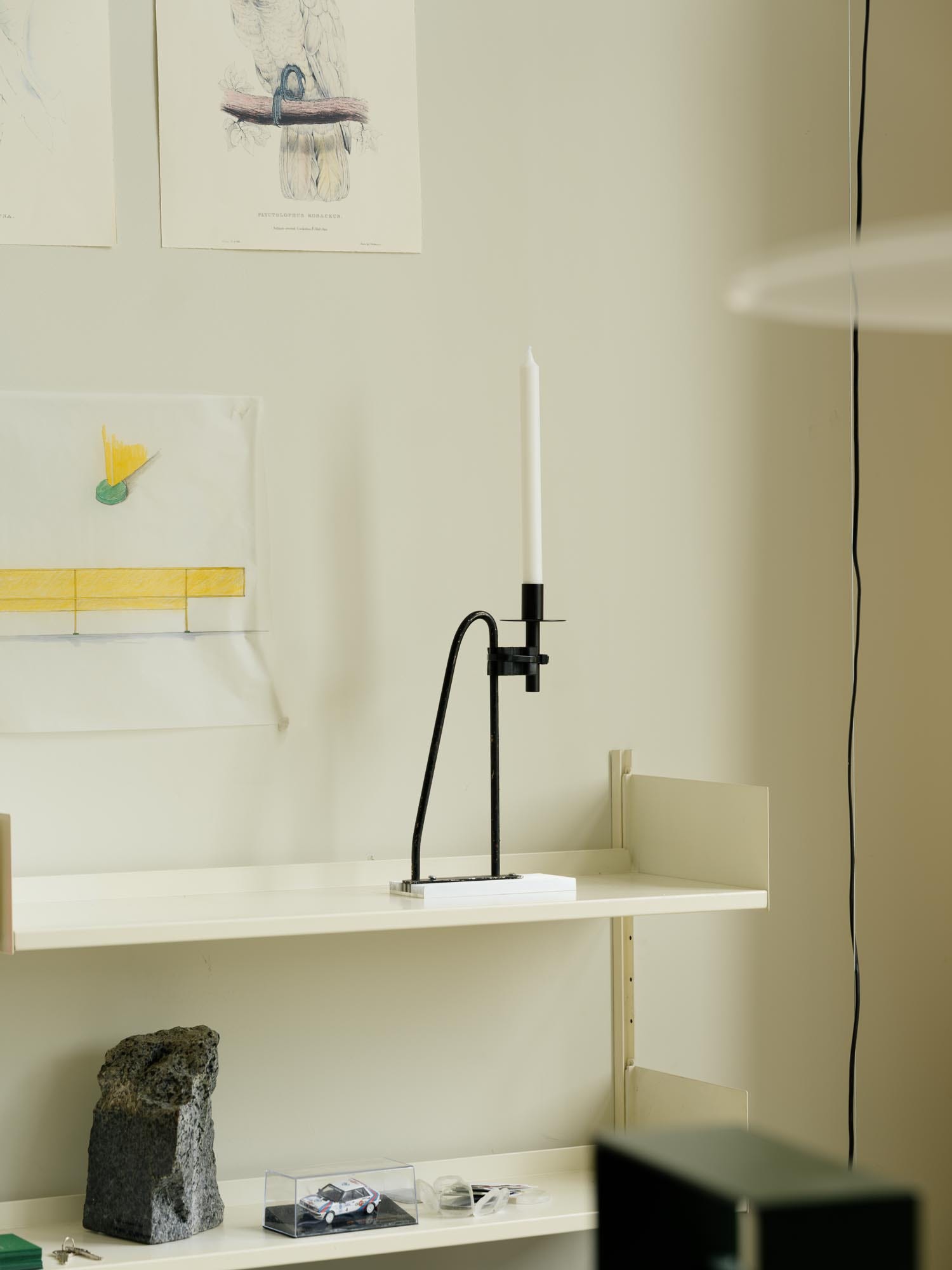
The Candle holder: Heat sink as base, a wall mounted coat hanger fastened with screws, a spacer for mounting roof racks on cars, a candle base and plastic strips. This was the first product in the series, and the profile of the coat hanger was what started it all.


Design, not craft
There's tremendous value in standardized components. Engineers have spent thousands of hours perfecting nuts, bolts, and threaded rods through real-world application. You can't easily design something more efficient. But combine them in new ways and you add value while capturing their inherent efficiencies.
The designer here is not an artist or craftsperson, but a critical thinker who understands component properties and plays to their strengths. Where to cut, how to stretch proportions, which colour and finish combinations create harmony and friction.
The Call to Action
OTS doesn't need corporate board approval or focus groups. It just needs to make someone smile and think "I'd like that in my life." No stated goals about selling 50,000 units or “solving” the home office.
As corporate structures grow, decision time increases. Vision and intuition get replaced by stakeholder approval processes. The result is focus-group soup and feature creep. OTS offers freedom from this "professional" approach that treats design brands as financial assets rather than engines for improving the world.
All recipes are available to download for free. Most importantly, I hope you'll see something you like and make it yourself; either as designed, or better yet, with your own adaptation.
The complete essay, including detailed descriptions of more pieces and deeper exploration of the architectural and philosophical influences, appears in Disegno #40.


